Why AI-Native Changes Everything
AI-native represents a fundamental reimagining of how businesses are structured, operated, and valued. It's the difference between adding AI features to existing processes and rebuilding the enterprise as a network of intelligent, autonomous workflows.
What Most Companies Are Doing Now
- Bolting AI onto legacy org structures
- Treating it as a feature layer on top of static departments
- Maintaining manual processes with AI assistance
What AI-Native Actually Implies
- Businesses architected as networks of modular workflows
- Orchestrated by AI agents with intelligence as core infrastructure
- Data and memory as foundational layers
From Org Charts to Agentic Workflows
Traditional companies organize around static departments—marketing, finance, operations, sales. Work flows through rigid approval chains, with each function operating in silos defined by the org chart.
AI-native companies organize around workflows—collections of interconnected processes that can be orchestrated, optimized, and redeployed by AI agents. The org chart becomes secondary to the workflow graph.

Workflows as Tradeable Assets

In an AI-native world, workflows become modular, reusable, and tradeable units. Instead of building monolithic businesses, companies assemble portfolios of workflows that can be deployed across brands, business units, or even sold/licensed independently.
- Build Once, Redeploy Everywhere: A "Lead Scoring & Qualification" workflow built for one product line can be redeployed across 10 brands in a portfolio with minimal customization.
- Workflows as Tradeable Assets: The most valuable component of an M&A deal may not be the customer list—it may be the proprietary workflow that converts leads at 3x industry average.
- Liquidity in Business Capabilities: Instead of buying or building entire companies, enterprises can license high-performing workflows—"rent" a best-in-class pricing engine or supply chain optimization module.
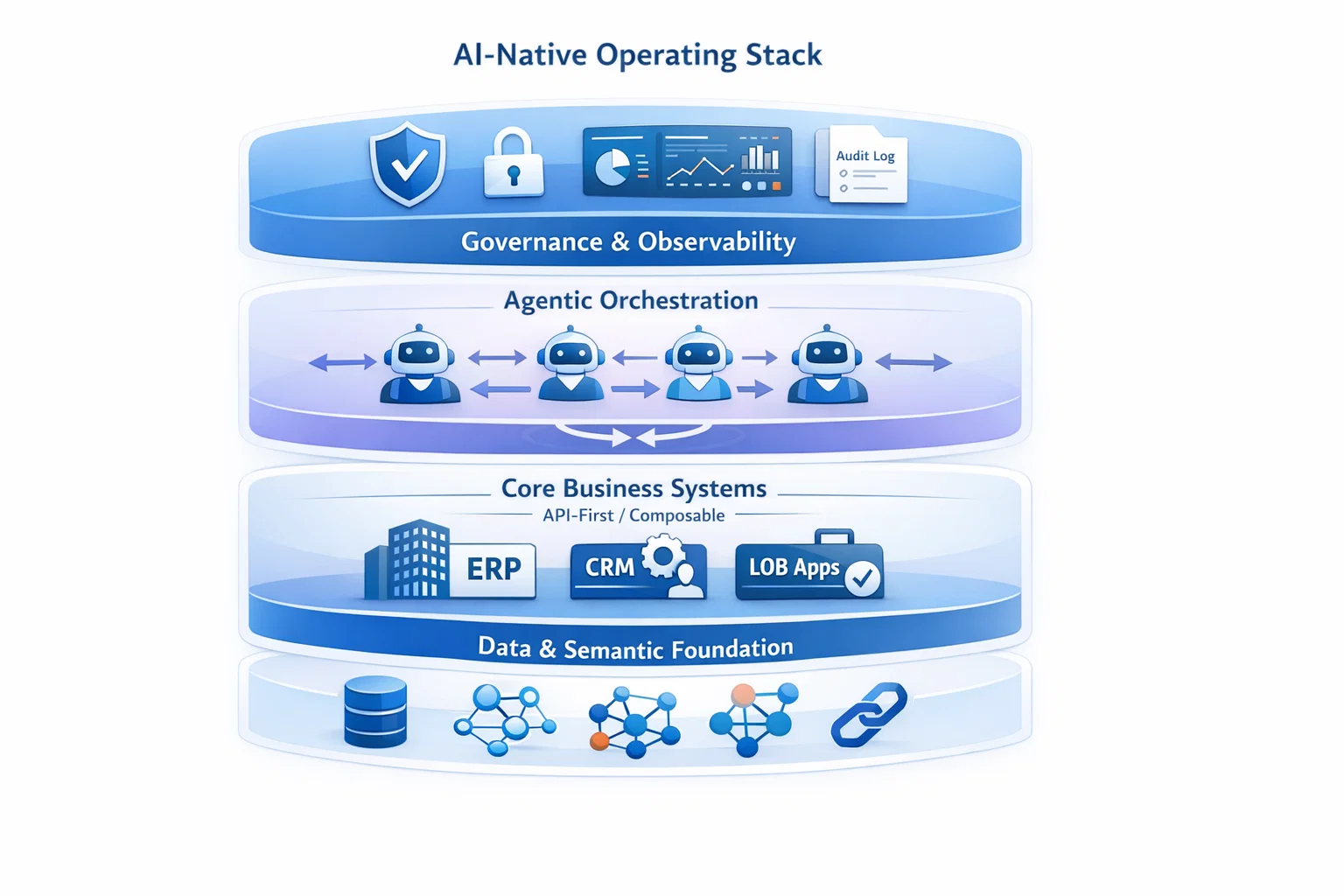
The AI-Native Operating Stack
AI-native businesses require a fundamentally different technology stack—one where data, intelligence, and orchestration are first-class infrastructure layers:
- Layer 1: Data & Semantic Foundation - Knowledge graphs, ontologies, and semantic layers that give AI agents contextualized, clean data—not just raw tables.
- Layer 2: Core Business Systems - API-first, composable ERP/CRM/line-of-business tools that expose operations as programmable workflows, not locked UIs.
- Layer 3: Agentic Orchestration - Central intelligence layer where AI agents coordinate workflows, make decisions, handle exceptions, and learn from outcomes.
- Layer 4: Governance & Observability - Security, access control, audit trails, and real-time observability so you know what agents are doing and can prove compliance.
New Sources of Competitive Advantage
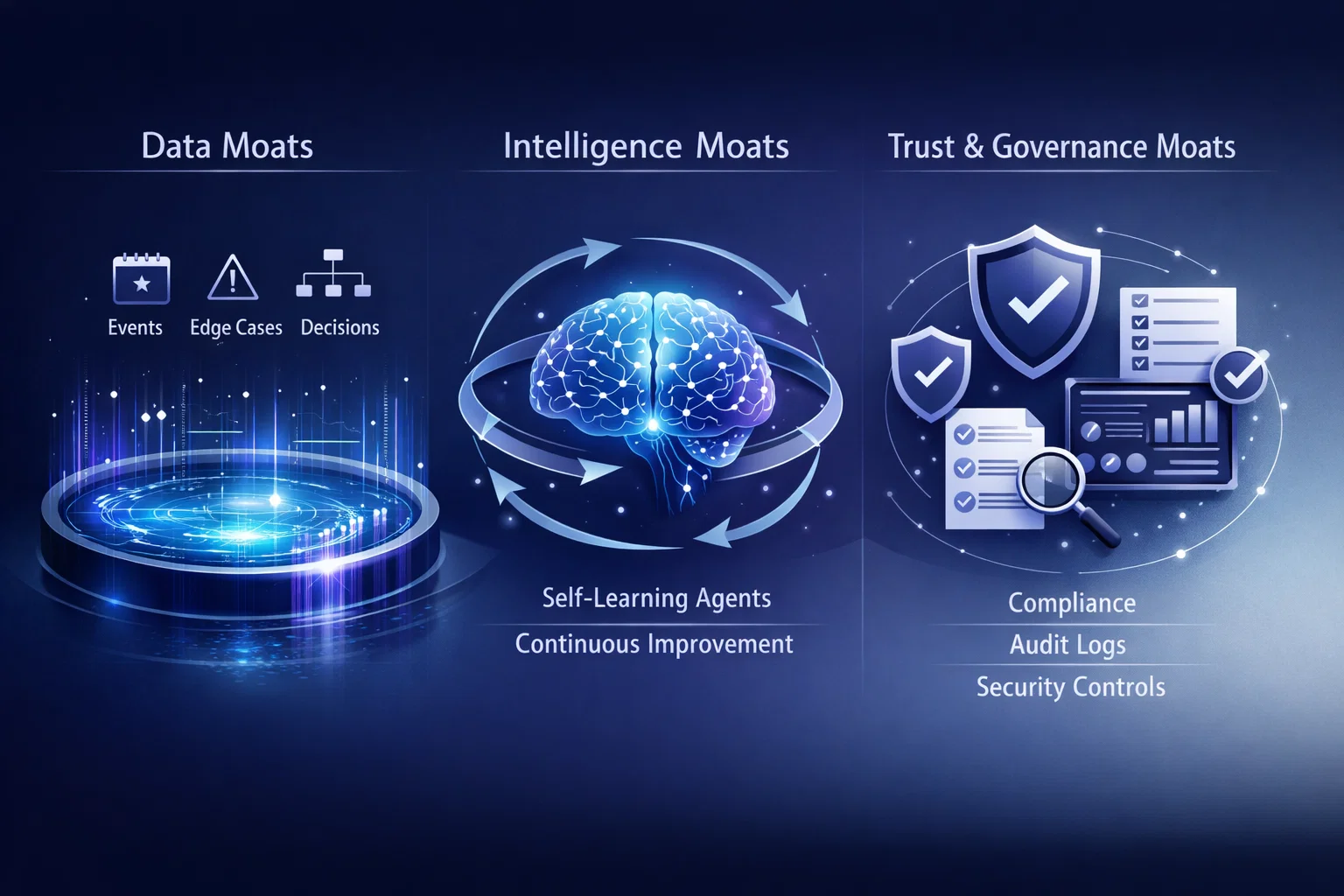
Traditional moats—brand, scale, distribution—still matter. But AI-native companies build fundamentally different sources of defensibility:
- Data Moats: Proprietary signals unique to your operations—workflow telemetry, decision outcomes, edge cases, and failure modes that train better agents.
- Intelligence Moats: Self-improving agents and central intelligence systems. The longer your agents run, the smarter they get—and the harder it is for competitors to replicate performance.
- Trust & Governance Moats: Safe, reliable, auditable AI systems. In regulated industries, the ability to prove compliance, explain decisions, and prevent hallucinations becomes a competitive advantage.
The M&A Revolution
When workflows are modular and portable, the unit of value in M&A changes. Investors and acquirers start valuing businesses based on workflow intelligence, redeployability, and revenue per employee—not just revenue multiples.
Traditional Business
- Primary Asset: Customer list, brand, physical assets
- Margins: Linear scaling—more revenue requires more headcount
- Valuation: Revenue multiples, EBITDA
- Integration Risk: High—merging teams, cultures, systems takes years
AI-Native Business
- Primary Asset: Workflows, data moats, agent intelligence
- Margins: Non-linear—agents scale without proportional headcount
- Valuation: Revenue per employee, workflow redeployability
- Integration Risk: Lower—workflows integrate and redeploy faster
The Future of Work
In AI-native companies, humans don't execute workflows—they design, orchestrate, and optimize them. The role shifts from "do the work" to "ensure the agents are doing the work correctly and continuously improving."
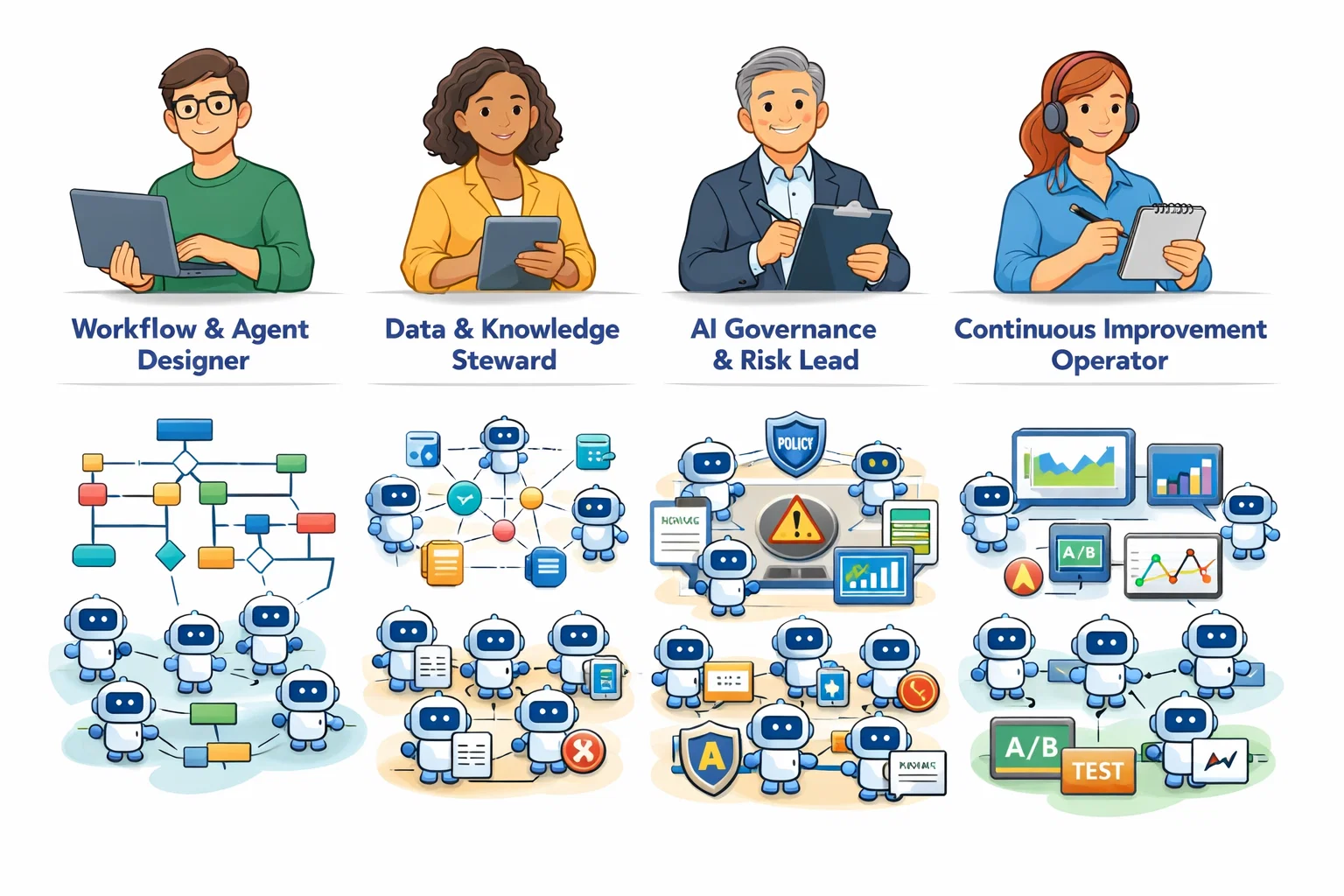
New roles emerging:
- Workflow & Agent Designers: Architects who map business processes, define decision logic, and encode them into agentic workflows.
- Data & Knowledge Stewards: Teams that curate ontologies, maintain semantic layers, and ensure agents have clean, contextualized data.
- AI Governance & Risk Leads: Specialists who define guardrails, audit agent decisions, manage compliance, and prevent AI failures.
- Continuous Improvement Operators: Analysts who monitor workflow performance, identify bottlenecks, and retrain agents based on outcomes.
What's Still Missing in Today's Tech Stack
The vision of modular, redeployable business workflows faces significant technical and standardization barriers. While tools like Terraform and MCP represent important steps forward, the current technology landscape lacks the foundational infrastructure needed to fully enable "containerized business models."

The Critical Missing Standards
- Business Ontology Framework (BOF): Without standardized ontologies for describing business operations, different organizations cannot interoperate. If one company calls it "Purchase Order" and another calls it "Procurement Request," AI agents can't understand or exchange workflows across enterprises.
- Universal Business Language (UBL): The global business landscape needs a common vocabulary for commercial transactions. UBL provides XML-based standards for documents like invoices, orders, and shipping notices—but adoption remains fragmented. For AI-native businesses to scale globally, UBL (or equivalent) becomes critical infrastructure.
- Business Process Markup Language (BPML): Terraform excels at infrastructure provisioning but has zero capability for business logic. BPML and similar standards are needed to define agentic workflows—including decision logic, human approvals, state persistence, exception handling, and multi-agent coordination. Current alternatives (BPEL, BPMN) are too rigid for AI-native systems.
- Packaged Business Capabilities (PBCs): PBCs represent self-contained business units that function like Docker containers for business operations. A "Pricing Engine" PBC or "Lead Qualification" PBC can be deployed across divisions, subsidiaries, and even sold/licensed to other enterprises. As PBCs mature, business valuations will increasingly depend on the quality, redeployability, and intelligence of these packaged capabilities.
Why This Matters for Enterprise Architecture
Today's tech stack—Terraform for infrastructure, APIs for integration, proprietary ERPs for business logic—cannot support the AI-native future. We need:

- BOF for semantic interoperability: Shared ontologies so workflows can be understood and exchanged across organizational boundaries.
- UBL for global commerce: Standardized business documents that AI agents can interpret universally, eliminating proprietary data formats.
- BPML for agentic orchestration: A declarative language that encodes business workflows—not just technical pipelines—with support for AI decision-making, human oversight, and dynamic adaptation.
- PBCs for modular value: Self-contained capabilities that can be versioned, deployed, monitored, and valued independently—turning business functions into tradeable assets.
How to Start Architecting AI-Native Today
While waiting for standards to mature, forward-thinking businesses can start building AI-native foundations now:

The Path Forward
The most valuable companies of the next decade may not just own products—they may own redeployable businesses in code.
Imagine a world where acquiring a company means deploying its workflows across your entire portfolio in weeks. Where launching a new brand doesn't require building infrastructure from scratch—you pull proven workflows from your library. Where competitive advantage comes not from scale or distribution, but from having the smartest agents, the best data moats, and the most modular, portable business architecture.
That future is being built today. The question is: will your business be architected for it?